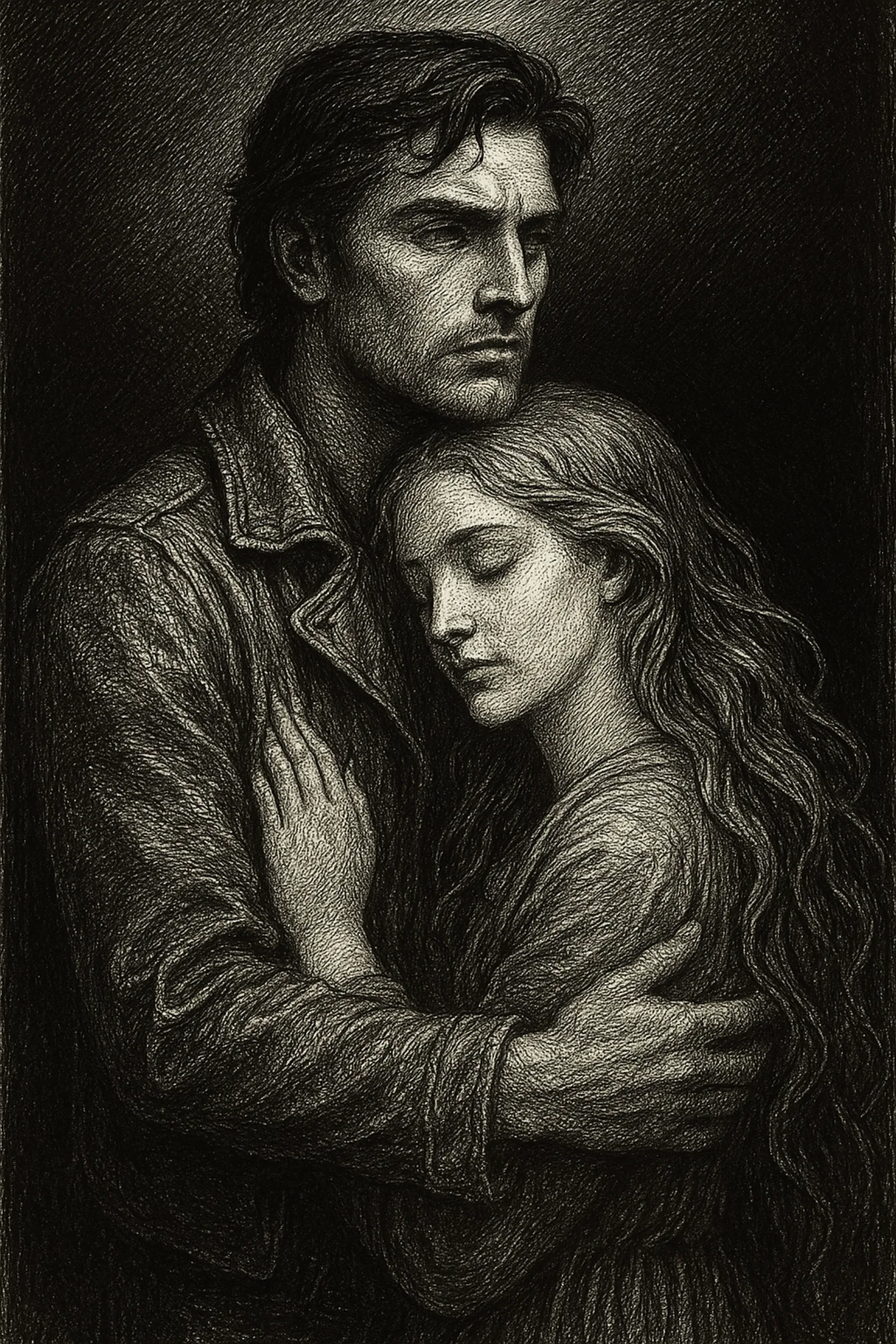
The neuroscience they never told you
He Couldn't Love You.
His Brain Wouldn't Let Him.
The narcissist who destroyed you has a physically damaged brain. Reduced gray matter in the insula. Dysfunctional amygdala. Broken mirror neurons. They were never capable of feeling what you felt. It was never your fault.
24/7 AI chatbot + survivor community + neuroscience research
You've Been Told It's "Just Psychology"
Every therapist, every YouTube video, every book explains narcissism as a behavior pattern. But behavior is just the surface. Underneath, there's a brain that never fully developed. And that changes everything.
The Silenced Insula
MRI scans show narcissists have significantly less gray matter in the anterior insula — the region responsible for empathy and compassion. They physically cannot feel what you feel.
See the evidence →
The Hijacked Amygdala
Their rage isn't personal — it's a primitive brain response. The amygdala fires without prefrontal cortex regulation. They react like a cornered animal, not a reasoning adult.
See the evidence →
Broken Mirror Neurons
The neural system that allows humans to mirror emotions and understand others never fully formed. They read your emotions intellectually but cannot feel them. Ever.
See the evidence →
24/7 AI-powered education
My Digital Mind,
Available Whenever You Need It
I'm Dr. Daros — physician, neuroscience researcher, and narcissistic abuse survivor. I built this AI with my research on the pathophysiology of the narcissistic brain so you can access my knowledge at 3am, on a Sunday, whenever the pain hits.
- ✓ Understand why they behaved that way — at the brain level
- ✓ Stop blaming yourself — the science proves it wasn't you
- ✓ Available 24/7 — no appointments, no waiting rooms
- ✓ Based on real MRI studies, peer-reviewed research, and clinical experience
100M+
Americans impacted by narcissistic abuse
85%
of victims blame themselves
24/7
AI support — no waiting
40+
peer-reviewed studies referenced
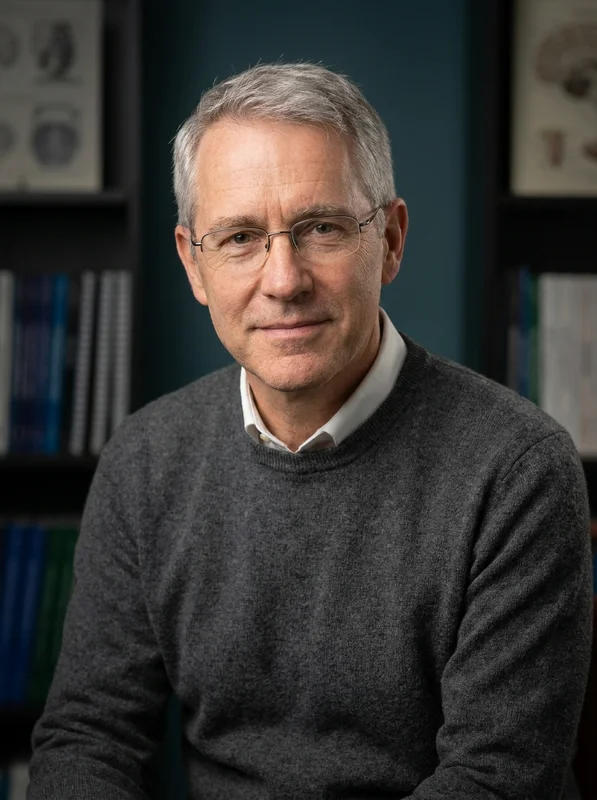
Dr. Daros
Expert in cerebral pathophysiology
& the neuroscience of narcissism
My Story
I Know Your Pain Because I Lived It
I met the woman I thought was the love of my life. Almond-shaped eyes. Chestnut hair. A warmth in her body that made everything feel safe. The first time I kissed her was over champagne at a restaurant — I had invited her to dinner, and from that very first night, something ignited between us that felt deeper than anything I had ever experienced.
She was a professional, like me. We talked about marriage. About building a family. She liked every style of music I liked. The same food. The same places. She was me — but in female form. A perfect mirror. I felt I could trust her with every problem, every fear, every dream. For two months, I lived in paradise.
Then paradise shattered.
She came to pick me up at my clinic. A female patient was leaving the office. Suddenly, the woman I loved was screaming in my workplace — tears streaming, face contorted with rage, accusing me of sleeping with my patients. When I tried to approach her, she kicked me. Her eyes held a hatred I had never seen in another human being. Her body went rigid. I stood there, paralyzed by cognitive dissonance. I even felt guilty. I actually considered not treating female patients anymore, just to keep the peace.
She told me she had been physically abused by multiple men as a child. My heart broke for her. I loved her. I didn't know that the disorders I'd studied in psychiatric hospitals could walk beside me, sleep beside me, pretend to love me.
But everything kept escalating. I discovered she was talking to other men behind my back. When I confronted her, she went to my family, my friends — and systematically destroyed my reputation. I felt like I was living with two completely different people trapped inside one body.
For two years, the cycle repeated: honeymoon, devaluation, breakup, then she'd come back — apologetic, seductive, irresistible. We'd laugh together, make love, and for a brief moment I'd believe things had changed. Then the abuse would return, each time faster, each time more devastating.
Then came the moment that changed everything.
One of my closest family members fell seriously ill. I was with her when I got the news. I told her we needed to go — immediately — in my car. I was desperate, terrified, racing against time. But she was distant. Cold. As if my pain didn't register. She did everything humanly possible to slow me down, to waste my time. She got out of the car, said "wait here," and disappeared. Twenty minutes. An hour. When she came back, she was laughing. Completely detached from my anguish. When I confronted her, she turned it into a fight.
It was then that I understood: she couldn't tolerate my attention being directed at anyone else. Not even a dying family member. My pain was irrelevant to her — it was the loss of narcissistic supply that she couldn't bear.
As a physician, I started asking a question most victims never think to ask: Is something structurally wrong with her brain?
I began studying personality disorders — not from psychology textbooks, but from neuroscience research. MRI studies. fMRI scans. White matter integrity. Gray matter volume. And I found a diagnosis that matched everything — from the childhood origins to the abuse cycle, from the explosive rage to the empty eyes.
That knowledge set me free.
I understood I was standing in front of an atrophied brain that would never be as empathic as mine. That she was simultaneously with me and hating me. That she betrayed me while smiling at me. That behind my back, she told everyone I was the monster.
When I finally left, she tried hoovering once a month for an entire year. Then every six months. Then once a year. One day she showed up at my office. I told her I was recording. I drew a diagram of her brain on paper and explained, calmly, that she had an atrophied prefrontal cortex and a silenced insula. That there was no cure. That I had no interest in her as a person.
She never came back.
I still received calls and emails for three more years. But I knew exactly how to respond: by not responding. No reaction means no narcissistic supply. And without supply, you cease to exist in their corrupted reward system.
I survived because I had two things most victims don't: a family that stood by me, and a medical brain that could dissect what was happening at the neuroanatomical level. The knowledge was my weapon. And now, through this AI trained with my research, that weapon is yours — 24 hours a day, 7 days a week.
Free Download
The 5 Brain Structures That Prove It Wasn't Your Fault
Get the neuroscience summary sent to your inbox
No spam. Unsubscribe anytime. Your data stays private.
It Was Never Your Fault
The brain scans prove it. The research confirms it. And I'll explain it to you, step by step, as many times as you need.
Start Healing Now